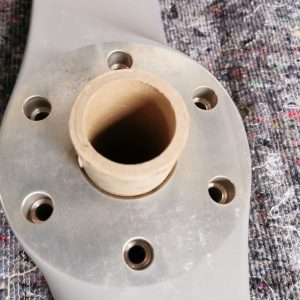
New, Never Installed presents aircraft owners, builders, maintenance facilities, restorers, and aviation parts buyers with an identifiable propeller option for an appropriately verified aircraft installation.
A Sensenich Propeller P/N 74DM6-0-60 may also be advertised as a Sensenich 74DM6 Propeller or 74DM6-0-60 Aircraft Propeller when every model character, suffix, serial marking, and alteration detail is stated accurately.
Whether described as a Sensenich Fixed-Pitch Propeller, Sensenich Aluminum Propeller, Fixed-Pitch Aluminum Propeller, or Aluminum Aircraft Propeller, the individual unit should receive professional inspection before installation.
Correct dimensional and installation research supports safer and more efficient propeller selection.
The Two-Blade Aircraft Propeller, Sensenich Aircraft Propeller, Replacement Aircraft Propeller, and Certified Aircraft Propeller phrases can help professional buyers locate a component for maintenance, restoration, new construction, or inventory.
Confirming the Exact Aircraft Propeller
The complete propeller designation should be verified through the manufacturer data plate, hub markings, blade markings, serial number, original records, packaging labels, photographs, and available Sensenich technical information.
The serial number should match all supplied invoices, manufacturer documents, inspection records, and release paperwork.
Evaluating an Unused Sensenich Propeller
The phrase new and never installed generally means that the propeller has not been operated in flight or permanently mounted on an aircraft.
Any temporary mounting or dimensional checking should be disclosed clearly.
Evaluating General Aviation Propeller Requirements
A fixed-pitch propeller uses blade geometry manufactured or adjusted for a defined range of engine and aircraft operating conditions.
The pitch configuration affects engine RPM, acceleration, climb characteristics, cruise behavior, and overall loading.
Aluminum Aircraft Propeller Construction
Metal construction does not eliminate the possibility of fatigue, corrosion, impact damage, improper material removal, dimensional loss, or storage deterioration.
Identification markings should remain legible and protected during handling.
Avoiding Unverified Propeller Size Claims
Verified dimensions support correct replacement-propeller selection.
Diameter should be measured using an appropriate hub-center reference and complete tip-to-tip procedure.
Verifying the 74DM6-0-60 Pitch
Verified configuration helps buyers understand the intended application of check here the 60-Inch Pitch Propeller.
A blade-to-blade pitch difference can contribute to vibration, reduced efficiency, and unequal aerodynamic loading.
Avoiding Universal O-320 Compatibility Claims
A propeller approved for one O-320-powered aircraft may not be approved for another aircraft using a different engine variant, airframe, spinner, or installation configuration.
The mounting flange, pilot fit, bolt pattern, spacer arrangement, and spinner components should also match the receiving installation.
Inspecting the Complete Propeller Assembly
Blade comparison should include the faces, backs, roots, leading edges, trailing edges, tips, and hub transitions.
Careful handling preserves the Two-Blade Aircraft Propeller assembly.
Inspecting the Propeller Mounting Area
The propeller hub should match the receiving engine flange, pilot diameter, bolt pattern, approved spacer arrangement, spinner components, and required installation hardware.
The propeller should never be drilled, forced, or modified to fit an incompatible engine flange.
Identifying Storage and Handling Concerns
The depth, location, orientation, and extent of any defect affect the appropriate inspection or corrective action.
Detailed surface review helps support the claimed new condition.
Maintaining the Factory Finish
The hub, bolt holes, blade roots, edges, and areas beneath packaging deserve particular attention.
The propeller should not be stored directly on concrete floors, damp timber, unstable shelving, or unsupported blade tips.
Understanding Approved Propeller Design
The Certified Aircraft Propeller description generally refers to a propeller design manufactured under applicable approved production and certification standards.
A release certificate or service tag belonging to another serial number does not establish the condition of the offered unit.
Maintaining Aircraft Propeller History
Original purchase paperwork may help establish the never-installed history.
Documentation associated with a planned aircraft installation does not independently approve another aircraft application.
Pre-Purchase Inspection Checklist
Uncertainty regarding identity, dimensions, storage, condition, or installation eligibility should be resolved before shipping.
- Confirm P/N 74DM6-0-60, the complete serial number, manufacturer markings, 74-inch diameter, 60-inch pitch, blade count, hub dimensions, bolt pattern, and original configuration.
- Review the history for trial fitment, dropped handling, transportation impact, moisture exposure, chemical contamination, improper storage, or unauthorized repair.
- Inspect and photograph the propeller immediately after delivery before cleaning, measuring, balancing, repairing, mounting, or modifying it.
Protecting a New Two-Blade Propeller in Transit
Blade tips, leading edges, trailing edges, mounting surfaces, bolt holes, identification plates, and factory coatings require suitable protection.
The propeller should remain immobilized throughout transport.
Storing the 74DM6-0-60 Propeller
Storage supports should avoid concentrating weight on blade tips, edges, or thin blade surfaces.
The unit should not be stored directly on damp concrete, exposed ground, unstable shelving, or areas vulnerable to roof leaks.
Professional Installation Requirements
Incorrect bolts, unsuitable washers, damaged threads, or improvised spacers should not be used.
Blade tracking should be evaluated after mounting.
Dynamic balance may be considered after mechanical condition and correct installation are confirmed.
Maintaining the Leading Edges and Finish
Cleaning should use suitable materials and methods that do not attack aluminum, coatings, markings, or data plates.
Recurring vibration should prompt review of the propeller, spinner, engine mounts, flange, ignition system, and engine condition.
Commercial Value of a New Sensenich Propeller
A recent professional inspection may add value when the scope, measurements, findings, and documentation are described accurately.
Commercial evaluation should focus on verified suitability rather than condition wording alone.
Final Thoughts on the Sensenich 74DM6 Propeller
New, Never Installed offers stronger commercial value when its serial number, manufacturing information, diameter, pitch, storage conditions, documentation, and included hardware are described accurately.
Buyers should request current photographs, exact dimensional information, transparent condition disclosures, inspection details, protected freight arrangements, secure payment terms, and qualified propeller review.
Whether the product is described as a 74-Inch Aircraft Propeller, 60-Inch Pitch Propeller, Lycoming O-320 Propeller, or General Aviation Propeller, aircraft-specific applicability remains essential.
With prompt attention to scratches, coating damage, corrosion, vibration, loose hardware, spinner concerns, impact events, and environmental exposure, the installation can preserve its operating potential.